


DARTMOUTH
KALE
INITIATIVE
EAT
BIG
GREENS
The Dartmouth Kale Initiative
The Dartmouth Kale Initiative is a collaborative effort to bring more locally grown food into Dartmouth Dining while strengthening the regional food system that makes local purchasing possible.
In 2025, Dartmouth College, Vital Communities, and the Center for an Agricultural Economy received a $100,000 Kendall Food Vision Prize to test a new local kale supply chain — supporting farmer relationships, new processing equipment, distribution, and Dartmouth’s commitment to purchase the finished product. Dartmouth Application Materials
How does kale get from local farms to your plate?
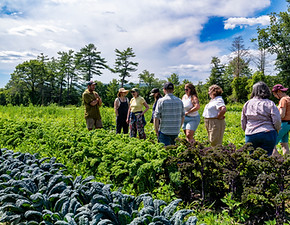
FARMS
Local farms grow harvest, and pack the kale. Advance purchasing commitments give farmers greater confidence to plant for an institutional market. Our local growers are Root 5 Farm in Fairlee, VT and Edgewater Farm in Plainfield, NH.


REGIONAL PROCESSING
Washes, cuts, packages, and prepares local produce in the forms dining kitchens need. Our regional processor is Just Cut in Hardwick, VT. Just Cut is an innovative social enterprise of the Center for an Agricultural Economy.


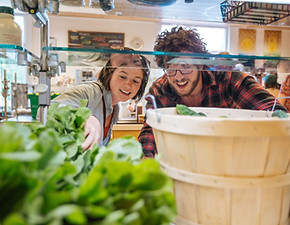
INSTITUTIONAL BUYERS
Dartmouth Dining buys produce from the distributors and processors to serve in dining halls like Class of '53 Commons.


It starts with kale.
It doesn't end with kale.
Kale is a starting point for a much bigger question: What would it look like for Dartmouth to build the kind of food system we want for the future?
This project gives us a chance to test what is possible when Dartmouth commits to local purchasing, farmers have greater confidence in their markets, and regional partners have the infrastructure and relationships needed to move food from field to dining hall. The goal is not simply to make one local product work—it is to learn from this pilot and use that experience to set more ambitious goals for sustainable dining, deepen long-term partnerships with regional farms and food businesses, and invest in a food supply chain that is more resilient, equitable, and rooted in our region.
The original Food Vision Prize proposal was designed around exactly this idea: use a successful pilot to demonstrate what is possible and build support for lasting institutional commitment to local food purchasing.
If kale can show us what is possible, Dartmouth can use its purchasing power, partnerships, and long-term commitments to help shape a truly sustainable regional food system—one that nourishes our campus while strengthening the farms, businesses, and communities around us.